
- Research Top
- Fundamental study of emerging viral disease on a major cash crop, cassava, in Southeast Asia
- Psychological Distress and Oral Health in Myanmar Adults: From Qualitative Exploration to a Community-Based Integrated Intervention Model
- SMEs Knowledge Network
- Mongolian Archaeology
- Research of Archiving Anime
- Securing Stable Food Supply in Northeast Asia
- Descriptive and typological study of Siberian minority languages
- A Culture that Supports Old Age: A Regional Comparison and International Comparison
- International Joint Research Project for Building a Transborder Public Participation Framework in Matters Concerning Nuclear Power
- Mountain Research Project on Asian High Mountains
- Comparative Studies on Establishing a Legal Framework to Address Urbanization in East Asia
- Building a Platform for Stemming the Declining Birthrate in Cooperation with Local Governments Enabling Universities to Help Local Efforts to Fight the Birth Dearth
- Asian Mountain Environmental Research Project: Aiming to Establish a Base for Mountain Research Aiming to Serve as a Base for Mountain Research on Environmental Changes and Natural Disasters in Asian Mountainous Regions
- Toward Implementing Preconception Care for Postponing, Wishing or Not Wishing Pregnancy: A Comparative Study in Japan and Sri Lanka Supporting Preconception Care for Men and Women in Their 20s Preparing for Wanted Pregnancy
- Community Building and Empowerment through Mutual Learning between Japan and Indonesia: The Coming (Chewing) Project
Fundamental study of emerging viral disease on a major cash crop, cassava, in Southeast Asia
Project Title
Fundamental study of emerging viral disease on a major cash crop, cassava, in Southeast Asia
Cooperating researcher
Nami MINATO Associate Professor/Institute of Science and Technology
Overview
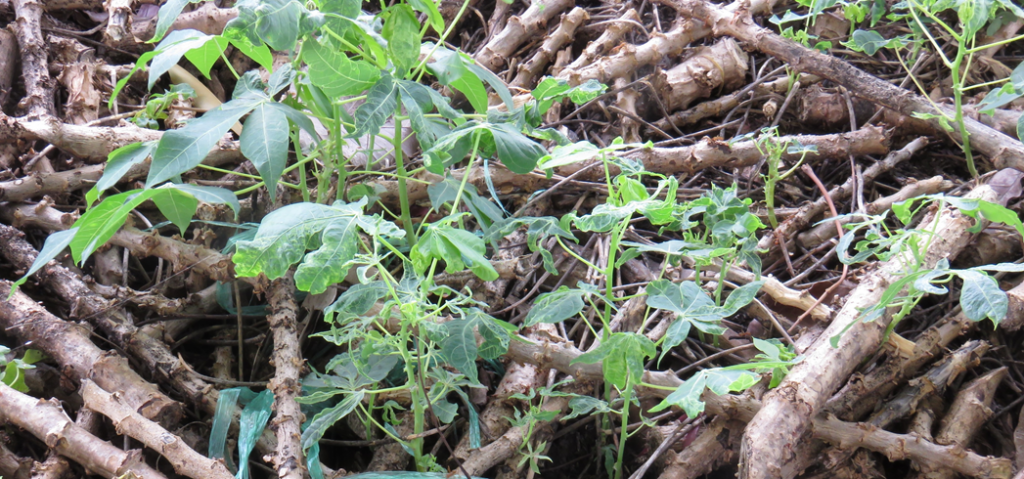
Cassava is a staple crop cultivated in tropical regions, and Southeast Asian countries account for the majority of its exports. Cassava mosaic disease (CMD), a viral disease on cassava, was first confirmed to have entered Southeast Asia in 2015. Over the following decade, it has spread to major cassava-producing countries, causing significant damage to yields. Furthermore, local smallholders producing cassava often lack sufficient knowledge about CMD, leading to further economic crises due to investments in ineffective fungicides/pesticides and the use of virus-infected seedlings. Given that the development of disease-resistant cultivars is seriously needed in Southeast Asia, the project leader and collaborative researchers have been working to evaluate candidate resistance genes against Sri Lankan cassava mosaic virus (SLCMV).
The aim of this project is to develop new control measures against the rapidly spreading cassava viral disease in Southeast Asia. In addition to evaluation of resistance gene candidates to SLCMV in Niigata, the evolutionary process of SLCMV in Cambodia, where the disease first appeared, will be analyzed. We will also investigate the virus control methods used by local farmers. There are limited examples of simultaneous surveys of disease occurrence and control methods, so this study can accumulate knowledge that will serve as a basis for introducing novel control measures.
Project Members
Researcher/Tropical Agriculture Research Front, Japan International Research Center for Agricultural Sciences
| Name | Title/Department | Area of Specialization |
|---|---|---|
| Nami MINATO | Associate Professor/Institute of Science and Technology, Niigata University | Plant Pathology |
| Hiroki TOKUNAGA | Researcher/Tropical Agriculture Research Front, Japan International Research Center for Agricultural Sciences | Plant Physiology |
News
Not Posted Yet